
Clermont, FL · Garage Door Service
Is Your Clermont Garage Door Worth Fixing or Replacing
Clermont homes mostly date 1973-2021, median 1993. Here's how that housing age and our mild climate decide whether a garage door repair or replacement makes sense.
- Repairs & new doors
- Springs & openers
- Serving 8 nearby communities
How Local Conditions Play In
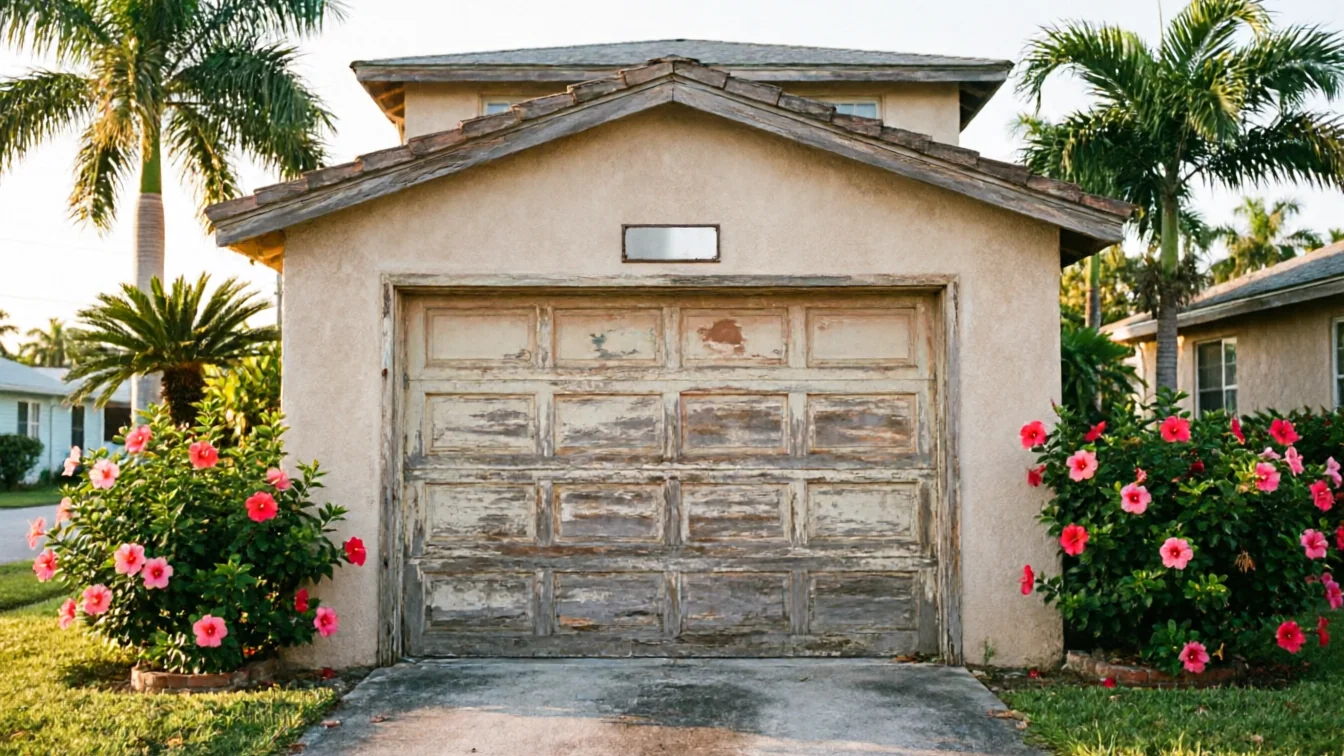
Clermont sits in a mild temperate band, which matters more than most homeowners realize when they're deciding on a repair. You don't get the hard freeze-thaw cycles that crack steel panels up north, and you don't get the kind of sustained humidity swings that warp wood overlay doors in places with real winters. That's good news for the metal and the hardware on your door - springs, tracks, and rollers here tend to wear out from use and age rather than from weather abuse. The housing stock across this area was mostly built between 1973 and 2021, with the median landing around 1993, and most neighborhoods cluster in 1980s and 90s construction. A door that age has usually seen thirty-plus years of openings and closings, which is the real driver of wear here, not storm damage or corrosion. What this means in practice: if your door is from that original 1980s-90s build-out and it's sagging or binding, you're almost always looking at tired springs, stretched cables, or worn rollers - not a door that's been beaten up by the climate. That changes what's worth fixing versus replacing, because the panels themselves usually still have good bones.
What You Pay
We don't quote prices without seeing the door, because a torsion spring swap on a 1990s single door and a full replacement on a double-wide opener setup aren't the same job. What we can tell you is how to think about the decision. With median household income in this service area around $84,211 and a large share of owner-occupied houses - roughly 49,775 of them across the broader area - most of the doors we're called out to see are original or close to it, installed when the house was built sometime in that 1973-2021 window. If the door and track are from that original build and the opener is newer, you're usually paying for parts and labor on a repair, not a whole unit. If the door itself is the original steel panel from the 80s or 90s and it's rusted through at the bottom or the panels are bowed, replacement starts making more financial sense than chasing repairs on a door that's going to need the next part replaced in a year anyway.
What Is Going On
Most of the service calls we get track back to age, not damage. A door built when the house went up in, say, 1993 - right at the regional median - is now old enough that the torsion spring has done its rated number of cycles, the cables are frayed at the drum, or the nylon rollers have gone brittle and started chipping. None of that is dramatic. It's just a door reaching the end of a normal service life. Because the climate here is mild, we don't see the panel delamination or rust-through you'd get somewhere with real winters and road salt - our failures are mechanical, not cosmetic. That's actually useful information when you're deciding what to fix: if the panels are straight and the only problem is a spring or a cable, that's a contained job. If the opener, the springs, and the rollers are all original and all failing around the same time, that's a sign the whole system is aging out together, which is common in houses built in that 1980s-90s stretch that makes up so much of the local stock.
What Most People Get Wrong
The biggest mistake we see is treating a dead spring as a reason to replace the whole door. A broken torsion spring on an otherwise sound panel from the 1980s or 90s build-out is almost always a repair, not a replacement - the spring is a wear part, and swapping it doesn't mean the door is on its way out. The opposite mistake happens too: people keep replacing individual parts - a roller here, a cable there - on a door old enough that the steel itself is failing, and they end up paying for three small repairs before finally doing the replacement they needed from the start. One honest limitation on our end: we don't stock every roller and hinge size for every era of door, and if yours is a less common original panel from that early-90s construction wave, a part can take a few days to come in. That's worth knowing before you assume same-day service on every repair.
Frequently asked questions
My house was built in the early 90s - is the garage door original?
It's possible. A lot of houses in this area were built between 1980 and the late 90s, and in many of them the original door and opener are still in place. If you've never had the springs or opener replaced, assume it's original and have it checked - thirty-plus years of cycles is a long run for a torsion spring.
Does Clermont's climate cause garage door problems?
Not in the way cold-climate towns see it. Our mild temperate conditions mean you're unlikely to get cracked panels from freeze-thaw or heavy rust from road salt. Most failures here are mechanical wear - springs, cables, rollers reaching the end of their cycle life - rather than weather damage.
How do I know if it's worth fixing versus replacing?
If the panels are straight and it's a spring, cable, or roller problem, that's usually a straightforward repair regardless of the door's age. If the steel itself is bowed, rusted through, or the opener and springs are all failing at once, you're likely better off replacing rather than chasing one part after another.
Related garage door services in Clermont
More garage door guides
Book garage door service in Clermont
Call now or request a quote - tell us what the door is doing and where you are.