
Clermont, FL · Garage Door Service
Openers and Power Outages: What Clermont Homeowners Actually Deal With
Clermont homes built 1973-2021 run openers of very different ages. See how local housing stock and mild winters shape opener choice, cost, and what happens when the power drops.
- Repairs & new doors
- Springs & openers
- Serving 8 nearby communities
How Local Conditions Play In
Clermont's service area covers 29 named communities, and the housing in them spans 1973 to 2021, with the median build year sitting at 1993. That spread matters for openers more than people think. A house built in the early 90s almost certainly had its original chain-drive opener swapped out at least once by now - the motors just don't last 30 years. A house built in the 2010s might still be running its builder-grade opener, which was never top of the line to begin with.
The climate here is mild temperate, which is a break compared to places with real winters or real heat extremes. You're not fighting the thermal swings that crack opener circuit boards or make lubricant gum up in the cold. That's one less variable. But mild doesn't mean zero risk - it just means the opener itself isn't the weak point from temperature stress the way it would be elsewhere. The weak point tends to be age and whatever battery backup setup (or lack of one) came with the unit.
Across the 29 communities we cover, from Minneola and Oakland five miles out to Leesburg and Celebration closer to 17 and 18 miles, the housing age varies enough that we see three different generations of opener hardware in a single afternoon of calls.
What You Pay
We're not going to put a number here we can't back up, because the honest answer is it depends on what opener you've got and what's failed. What we can tell you is that the area's median household income is $84,211 across roughly 89,326 households, with about 49,775 of those being owner-occupied houses. That's a market where battery-backup openers and smart openers are within reach for most homeowners, which changes the conversation we have with you. It's not just 'fix the chain,' it's often 'is it worth putting a backup battery on this unit so a power outage doesn't leave you stuck.'
The honest limitation: if your opener is original to a house built in the early 90s, parts for that exact model may not exist anymore. At that point we're not quoting you a repair, we're talking replacement, and that's a different conversation than fixing a sensor or a circuit board on something newer. We'd rather tell you that up front than have you wait on a part that isn't coming.
What Is Going On
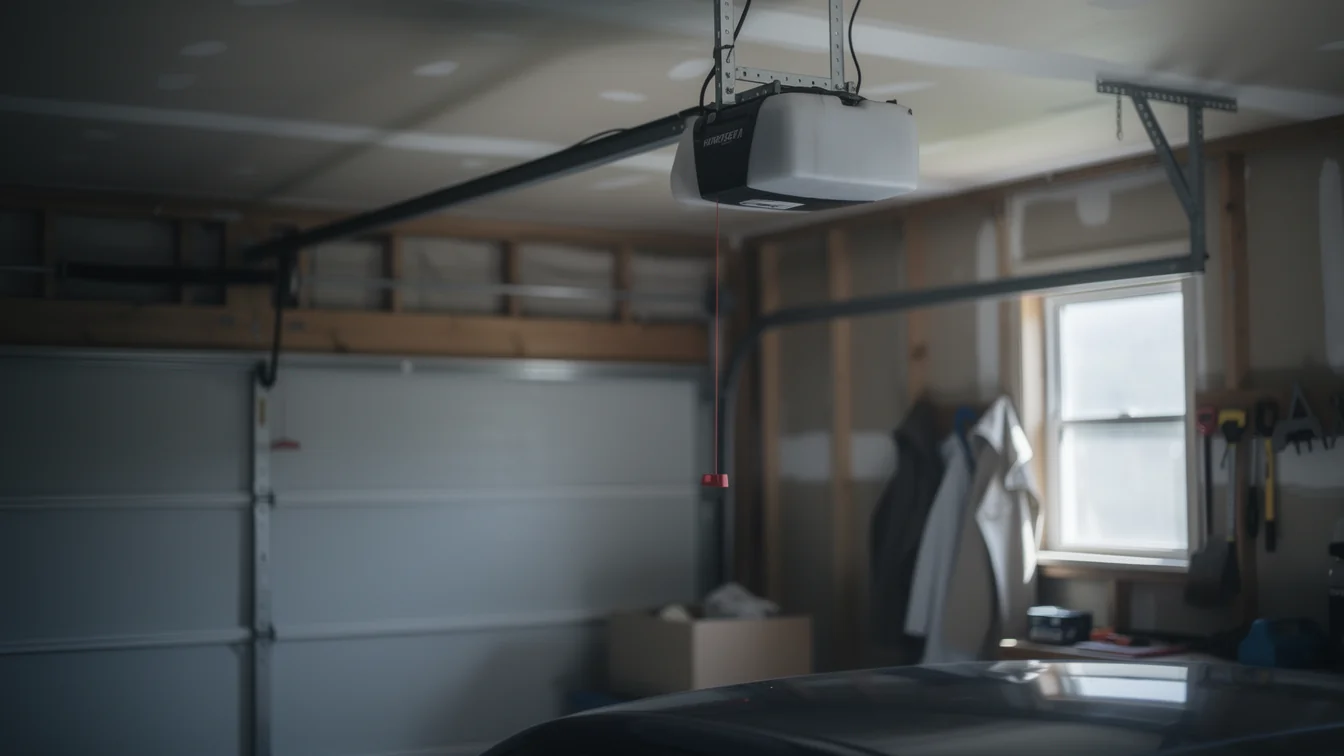
When the power outages out, a garage door opener with no battery backup just stops working - the door is now a manual door, full stop, regardless of how new or old the house is. What's actually going on in most calls we get after an outage isn't the opener failing, it's people not knowing there's a manual release cord, or pulling it wrong and jamming the carriage on the track.
In homes built closer to the 1973 end of our range, we also see openers that were replaced in the 2000s and now have backup batteries that have quietly died - nobody checks a backup battery until the day they need it. In the newer end of the build range, 2010s and later, openers more often came with a battery backup built in from the manufacturer, but the battery still has a shelf life and needs swapping every few years.
So the pattern across our 29-community service area isn't really about storms knocking out power - it's about what opener generation your house landed on, and whether anyone's touched the backup battery since it was installed.
What Most People Get Wrong
The biggest mistake we see: assuming a dead opener during a power outage means the opener is broken. Nine times out of ten it's fine. The door just needs the manual release pulled so you can lift it by hand until power's back, then the opener re-engages on its own.
The second mistake is buying a battery-backup opener because a neighbor got one, without checking whether the house's electrical setup and the opener's install date even call for it. If your house dates to the median 1993 build year and the opener's already been swapped once, a backup battery add-on might make more sense than replacing the whole unit again.
The third: ignoring the opener's age relative to the house. A house built in 1993 with its original 1993 opener still running is rare, but it happens - and that opener is not a candidate for a battery backup retrofit. At that point the safety sensors alone are outdated enough that we'd tell you replacement is the right call, not a bolt-on fix.
Frequently asked questions
Does my garage door opener work during a power outage?
Only if it has a battery backup installed and that battery is still good. Without one, the opener won't respond to the remote or wall button, but you can still open the door manually using the release cord - it disengages the opener so you can lift the door by hand.
Is Clermont's climate hard on garage door openers?
Not especially. The area sits in a mild temperate band, so openers here don't face the thermal extremes that cause circuit board failures or lubricant problems in colder or hotter climates. Age and use wear openers out here more than weather does.
How do I know if my opener's battery backup is dead?
Test it by cutting power to the opener's outlet while the door is down, then try the remote. If nothing happens, the battery's dead. Most backup batteries need replacing every few years regardless of how often you use them - they fail quietly.
Should I replace an original opener in an older Clermont house?
If your house dates near the 1993 median build year and still has its original opener, yes - parts for that generation are often unavailable, and the safety sensors won't meet current standards. Replacement makes more sense than chasing a repair on a unit that old.
Related garage door services in Clermont
More garage door guides
Book garage door service in Clermont
Call now or request a quote - tell us what the door is doing and where you are.