
Clermont, FL · Garage Door Service
What Clermont's Housing and Climate Actually Mean for Your Garage Door
A look at how Clermont's mild climate, 1980s-90s housing stock, and local household numbers shape what garage door problems you see and what fixing them actually costs.
- Repairs & new doors
- Springs & openers
- Serving 8 nearby communities
How Local Conditions Play In
Clermont sits in a mild temperate band, so you're not fighting hard freezes that snap springs the way a colder climate does, and you're not dealing with the kind of humidity swings that warp wood panels in a rainforest climate either. That takes some failure modes off the table. What it doesn't take off the table is the sun and the daily temperature swing between a hot afternoon and a cooler evening, which keeps metal panels and tracks expanding and contracting on a loop, year after year.
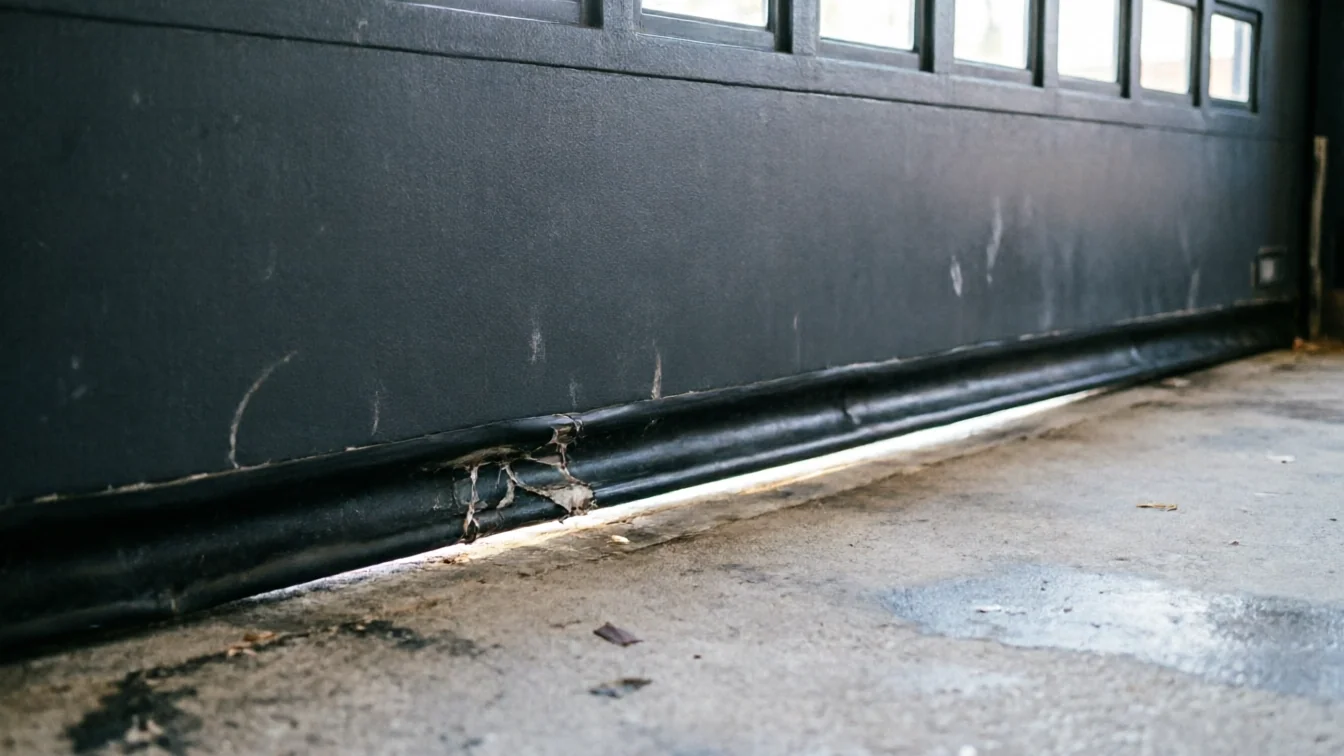
Housing here was built between 1973 and 2021, with a median build year of 1993. That means most garages in this area are running doors, openers, and weather seals and drafts designed for a build standard three decades old. A seal that was fine in 1993 has had thirty summers of UV and thirty winters of mild but real temperature shift to dry out and crack. It's not dramatic failure - it's a slow loss of seal that shows up as a draft along the bottom of the door, or daylight you can see through the side gaps, long before the door itself quits.
None of this is catastrophic weather. It's just time, applied steadily, to a specific generation of hardware.
What You Pay
I don't have a price list to hand you here, and I'm not going to invent one. What I can tell you is what drives the number up or down once a tech is standing in your driveway.
Age of the door matters more than almost anything else. A door built to the 1980s-90s standard that's common across this area often uses parts - a particular spring size, a particular track width - that newer doors don't use. Finding the exact match sometimes costs more than a universal part would, and sometimes it means replacing more than the one broken piece because the rest of the hardware won't take a modern substitute cleanly.
At a median household income of $84,211 across the service area, most owners here are in a position to choose full replacement over a third patch job when a door is genuinely done. That's a real choice, not a sales pitch - a 30-year-old door with a cracked panel and a tired opener is often cheaper over five years to replace once than to keep nursing.
The honest limitation: I can't quote you a number without seeing the door. Spring size, opener brand, and whether the track is bent all move the price, and guessing at it on a page does nobody any favors.
What Is Going On
Across the 29 named areas that make up this region's housing stock, the pattern repeats: mostly 1980s-90s construction, with scattered newer builds filling in since. That matters because a door installed in 1988 and a door installed in 2015 fail differently. The older one tends to go at the spring or the seal first. The newer one tends to go at the opener's electronics or a sensor misalignment.
With 49,775 owner-occupied houses among the 89,326 households in the service area, there's a lot of garage door hardware out there from that same build window, aging in roughly the same climate at roughly the same rate. That's not a coincidence - it's why certain repair calls cluster by neighborhood age rather than by street.
Minneola sits five miles out and Oakland the same distance, with Montverde and Ferndale six miles off - all close enough that the same 1980s-90s stock shows up across the area, not just in one pocket of it. If your door's acting up and your neighbor's is too, that's probably not coincidence either. It's the same hardware generation hitting the same age.
What Most People Get Wrong
The biggest mistake is treating a drafty door as a weatherstripping problem when it's actually a track or hinge problem. Weather seals and drafts get blamed for a lot that's really a door sitting slightly off its track, letting light and air through a gap that a new seal won't close. Swapping the bottom seal feels like a fix and sometimes buys a season, but if the door's hanging wrong, the gap comes back.
The second mistake is ignoring a spring that's starting to sound different - a slight grind instead of a smooth roll - because the door still opens fine. On a door built to the common 1980s-90s standard found across this area, a spring that's audibly working harder is usually weeks, not years, from letting go entirely, and a spring failure on a double door is not a safe thing to be standing under.
The third: assuming a mild climate means no maintenance is needed. Mild still means thirty years of sun and swing. The door doesn't need storm protection here, but it does need someone checking the seal and the spring tension on a schedule, not just when something finally breaks.
Frequently asked questions
Does Clermont's climate cause garage door problems the way cold winters do up north?
Not in the same way. The mild temperate climate here doesn't bring the hard freezes that snap springs or the deep humidity swings that warp panels. The wear you see is slower - UV and daily temperature swing drying out seals and gradually loosening hardware over decades, not sudden failure from a cold snap.
Why do so many doors in this area need the same repair around the same age?
Because so much of the housing here was built in the same window, with a median build year of 1993 and most stock dating to the 1980s-90s. Doors, springs, and seals from that era are aging out together, which is why a repair pattern often shows up across a whole neighborhood rather than one house.
Can you just tell me what a repair will cost over the phone?
Not honestly, no. Price depends on spring size, opener brand, and whether the track is bent, and those vary even between two houses built the same year. A number given without seeing the door is a guess, and I'd rather look first.
Related garage door services in Clermont
More garage door guides
Book garage door service in Clermont
Call now or request a quote - tell us what the door is doing and where you are.