
Clermont, FL · Garage Door Service
Garage Doors Built for Clermont's 1980s and 90s Housing Stock
Clermont homes mostly date to the 1980s and 90s, with steel panel doors and dated openers. Local housing age and mild climate shape repair costs here.
- Repairs & new doors
- Springs & openers
- Serving 8 nearby communities
How Local Conditions Play In
Clermont sits in a mild temperate band, which is the single biggest reason doors here fail slower than they do up north. You don't get the hard freeze-thaw swings that crack rubber seals, warp wood panels, or shrink steel tracks out of alignment overnight. That buys time, but it doesn't buy immunity. A door still has to open and close through daily heat cycling, and the nylon rollers and lubricant on an older unit dry out just the same, only on a longer clock than they would in Minnesota.
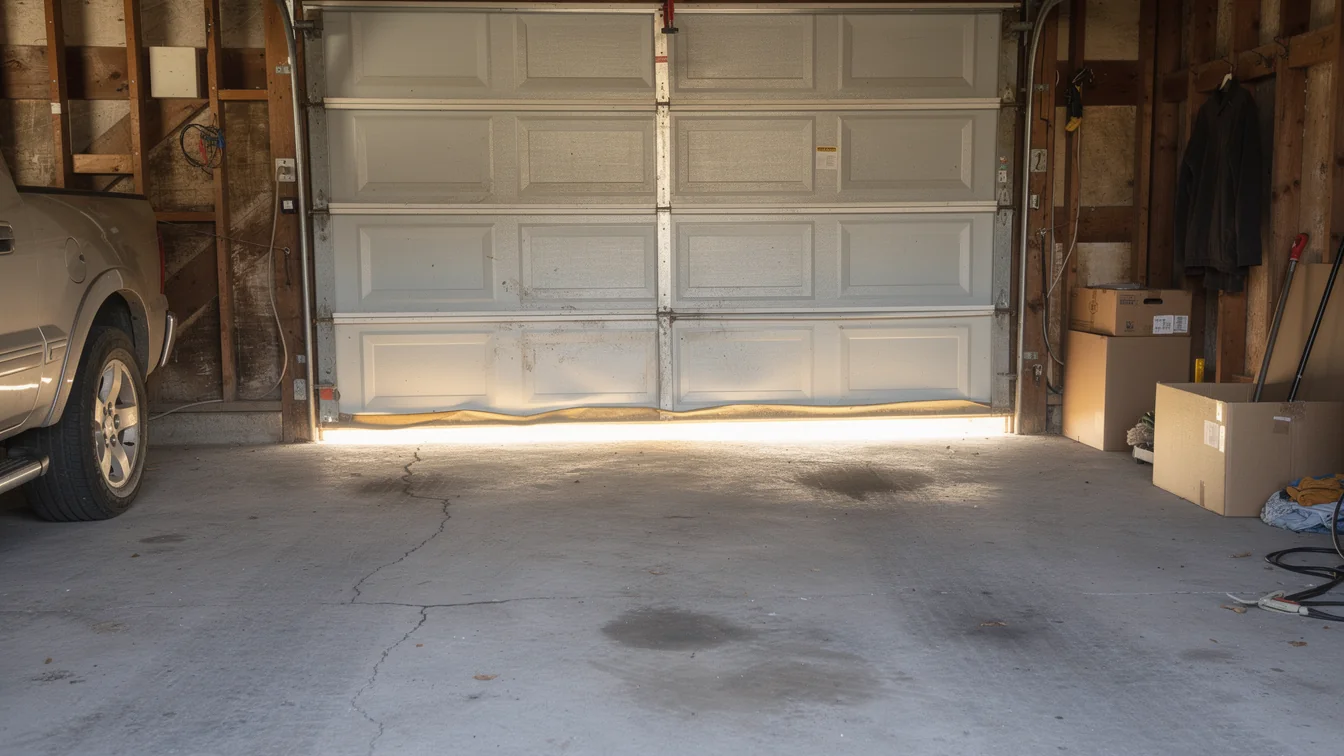
What matters more here is the age of the house behind the door. Housing in this service area runs from 1973 up through 2021, with the bulk of it dating to the 1980s and 90s. That means most of the openers we're called out on were installed before today's rolling-code security standard, and most of the doors themselves are the steel, non-insulated panel style that builders put in as standard equipment back then. The climate didn't wear those parts out. Thirty-plus years of daily cycles did.
So the local story isn't storms or cold snaps. It's a lot of original hardware from one narrow construction window, still running, still mostly fine, until a spring or cable finally gives out from age rather than weather.
What You Pay
We're not going to quote a number here that doesn't hold up once a tech is standing in your driveway looking at the actual spring size, panel count, and opener model. Pricing depends on what's in front of us, and we'd rather tell you that straight than make up a figure to fill this paragraph.
What we can tell you is what drives the number up or down in this area specifically. A door from the 1980s-90s construction wave usually runs standard torsion springs and a basic chain-drive opener, which are parts we can get and price without a special order. A door on one of the newer builds in this service area, from the 2000s or later, is more likely to have a belt-drive opener with a circuit board that costs more to replace than to repair, and that changes the math.
With a median household income of $84,211 across this area, most of the calls we get are homeowners who want the job done right the first time rather than patched twice. That's not a price point, it's just what we see: people asking for the real fix instead of the cheapest stopgap. If a job isn't worth fixing, we'll say so before we start, not after.
What Is Going On
Across the roughly 89,326 households in this service area, 49,775 are owner-occupied houses, and most of them sit inside that 1973-2021 build window with the heaviest concentration in the 1980s and 90s. That one fact explains most of the service calls we take. A door that age has had thirty-plus years of openings and closings on hardware that was never meant to be maintenance-free forever, and a lot of it is original to the house.
The area itself is spread across 29 named communities, and that same construction era shows up on the ground just as much in the towns around Clermont as it does here. Minneola sits five miles out, Oakland is another five, Montverde six, Ferndale six, Groveland eight: all close enough that the same housing-stock pattern holds. Farther out toward Windermere, Tavares, or Leesburg you start to see more mixed ages, but the core of this service area is still that mid-80s-to-90s steel panel door with a torsion spring sized for a lighter builder-grade door, not today's heavier insulated versions.
That's the real local picture: not a weather event, not a single bad batch of hardware, just a lot of houses that turned 30 to 40 years old around the same time, and doors that are reaching the end of their working life together.
What Most People Get Wrong
The most common mistake we see is someone replacing an opener on a 1980s or 90s door and assuming that fixes the whole problem. It doesn't. The opener is the easy, visible part. The spring, the cables, and the track on a door that old have the same thirty-plus years on them as the opener did, and they're usually closer to failing, not farther.
The second mistake is assuming a noisy or slow door just needs lubricant. Sometimes it does. More often, on a house from this era, it's a roller or hinge that's worn past the point where oil helps, and running it longer just loads more stress onto the spring.
Here's the honest limitation: we don't try to match a 30-year-old discontinued panel design if one section gets damaged. Builder-grade steel doors from that period often aren't made anymore in the same profile, and mixing an old panel with a new one looks worse than replacing the whole door. In that situation we'll tell you replacement is the straighter path, even though it's the bigger job, because patching it isn't a real fix.
Frequently asked questions
Why does my opener feel older than it should for a house this age?
If your house was built anywhere in the 1980s-90s range common across this area, your original opener likely predates the rolling-code security standard now built into newer units. It can still run fine, but parts and remotes for that generation get harder to source every year, which is often the real reason a fix on an old unit costs more than expected.
Does Clermont's climate mean my springs last longer?
The mild temperate band here means you avoid the freeze-thaw stress that cracks seals and warps tracks in colder regions, so parts do tend to run longer before failing from weather alone. But a torsion spring still has a cycle-count lifespan tied to daily use, and a 30-year-old spring is near the end of that regardless of climate.
My house was built in the 80s. Should I expect an insulated door?
Not necessarily. Builder-grade construction from that era across this service area commonly used standard steel panel doors without insulation, since that was the typical spec at the time. If you want insulation now, it usually means a door swap rather than a retrofit of the existing panels.
Can you match a damaged panel on an older door?
Often no. Many builder-grade door styles from the 1980s-90s construction wave aren't made in the same profile anymore, so a replacement panel may not match the existing ones in rib pattern or color. When that's the case, we'll tell you upfront that a full door replacement is the more honest fix.
Related garage door services in Clermont
More garage door guides
Book garage door service in Clermont
Call now or request a quote - tell us what the door is doing and where you are.